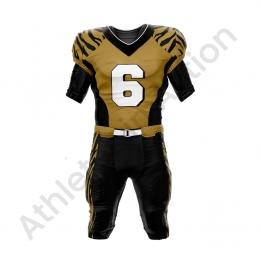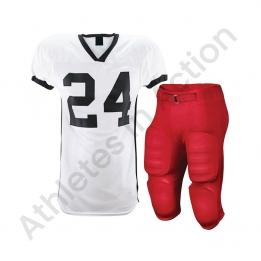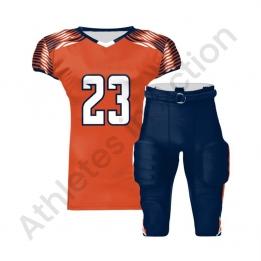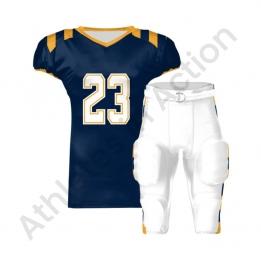

American Football Uniform
AIA-101
Description:
AIA Enpowering Athletes worldwide
Athletes In Action
๐ 1. Design & Concept
Everything starts with a design brief — this includes:
- Team colors, logo, numbers, and fonts.
- Performance goals (lightweight, moisture-wicking, flexibility).
- Digital mockups are created using CAD software so teams can preview looks before production begins.
This step is crucial because changes become expensive once manufacturing starts.
๐งต 2. Fabric Selection
Modern football jerseys are made for high performance:
- Most use polyester, often blended with spandex or other synthetics for stretch and comfort.
- Fabrics are chosen for:
- Moisture-wicking (pulling sweat away from the body).
- Durability (standing up to tackles and abrasion).
- Breathability (mesh panels or ventilated zones).
Manufacturers test fabrics for stretch, strength, and comfort before production.
โ๏ธ 3. Pattern Making & Cutting
Once the design and fabric are approved:
- Patterns for each size are created based on measurements.
- Fabrics are cut into panels — front, back, sleeves — either by hand or with precision cutting machines (sometimes laser cutters).
- Efficient cutting minimizes waste and ensures consistent sizing.
๐ 4. Sewing & Assembly
The cut pieces are sewn together using industrial machines:
- Reinforced stitching at stress points (shoulders, seams) so the jersey doesn’t tear during play.
- Techniques like flatlock seams can reduce irritation and add strength.
- Panels are engineered to follow body movement and reduce drag.
๐จ 5. Printing & Branding
After assembly, graphics are applied:
Common Methods
๐ฅ Sublimation Printing
- Dye is infused into fabric fibers with heat so colors stay vibrant and won’t peel or crack.
๐ Screen Printing or Heat Transfer
- Used for numbers and simpler designs — heat and pressure adhere graphics to fabric.
๐ชก Tackle Twill / Embroidery
- Team logos or numbers can be stitched on for a premium, textured look.
Professional jerseys (like NFL game jerseys) are often personalized using advanced heat-press techniques on site at events like the draft.
๐ 6. Quality Control
Before shipping:
- Every jersey is inspected for stitching faults, print issues, and sizing errors.
- Performance tests (stretch, moisture management) ensure durability.
This helps ensure jerseys can handle the stress of football — tackles, running, rain, and repeated washing.
๐ฆ 7. Finishing & Shipping
Final steps include:
- Adding labels, tags, and packaging carefully.
- Shipping to teams, retailers, or fans depending on the order.
Manufacturers may also handle logistics to ensure timely delivery.